
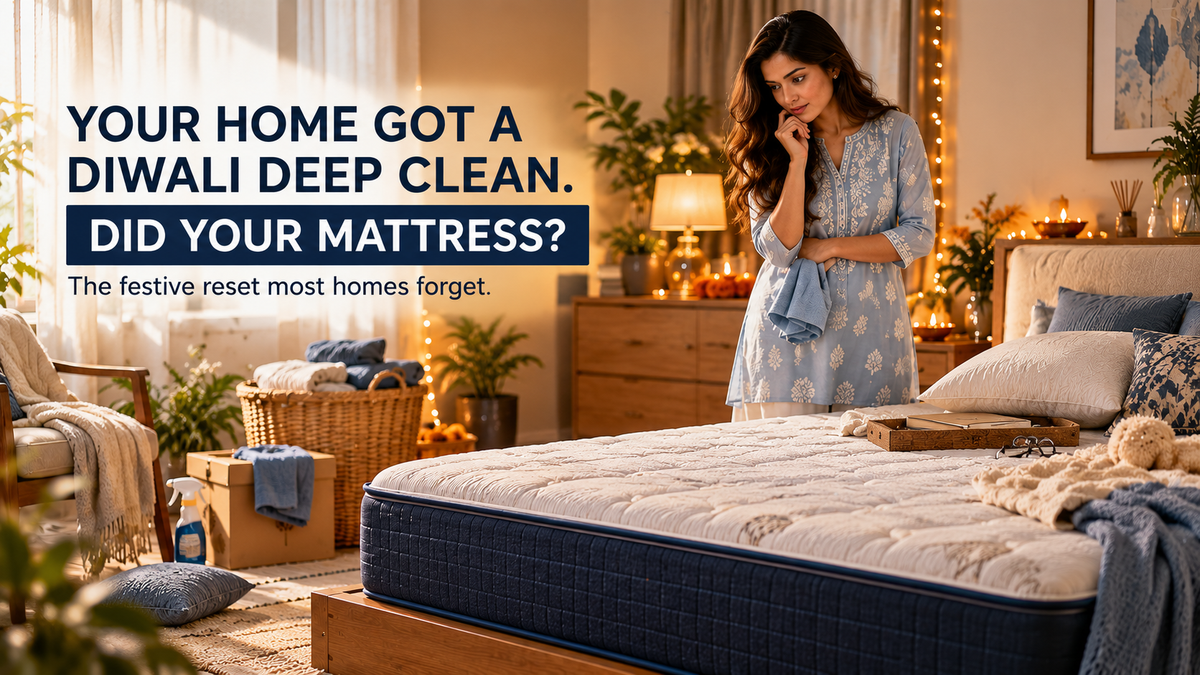

Every year, the days before Diwali turn Indian homes into construction sites of ambition. Curtains come down for a wash. Cupboards get emptied and reorganised. Walls get a fresh coat of paint, the good china comes out of storage, and somewhere in the chaos, someone always asks, "Should we get new lights this year?" It's a ritual of renewal — out with the dust and clutter of the old year, in with something brighter for the new one.
And yet, in the middle of all this deep cleaning, one object in the house almost always escapes scrutiny: the mattress you've been sleeping on for the last several years.
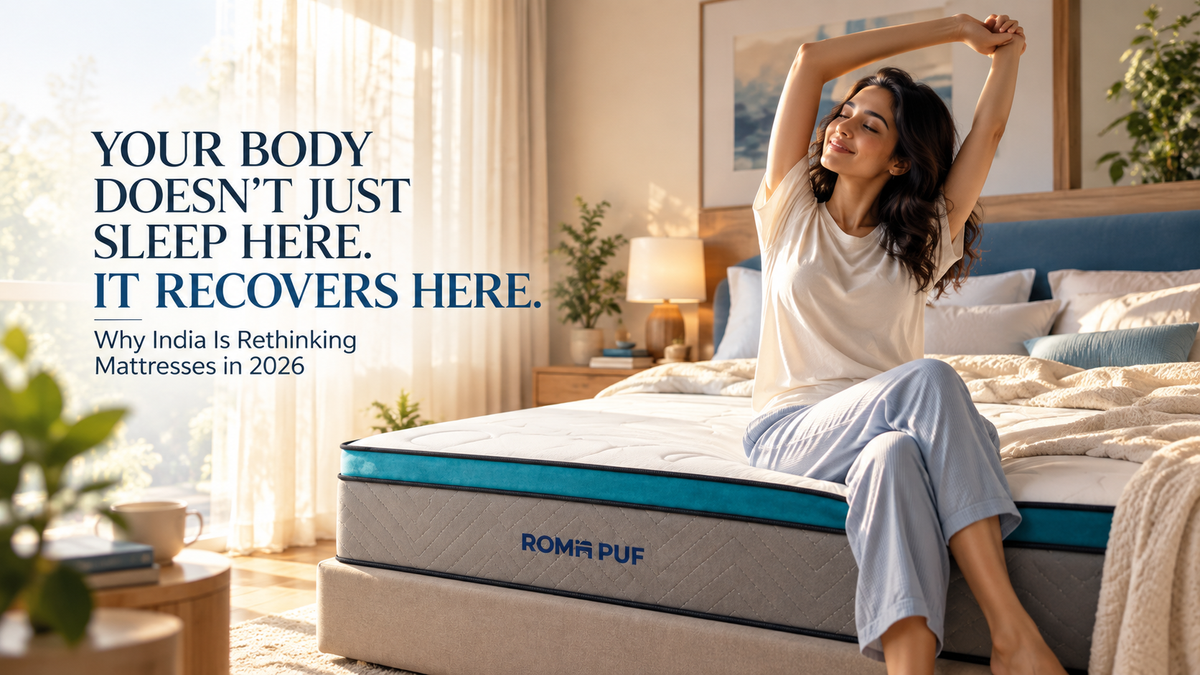
That oversight is becoming harder to justify. A wave of recent consumer research on India's sleep habits suggests the country is moving from what analysts are calling "hustle culture" to "recovery culture" — a shift where rest is treated less like a luxury and more like a health input, on par with diet or exercise. If 2026 is the year Indians started thinking about sleep differently, the festive season — when homes are already being reassessed room by room — is the most natural moment to extend that thinking to the bed itself.
The Festive Refresh Has a Blind Spot
Festive home upgrades tend to follow a predictable order of priority: furnishings, lighting, paint, maybe a new sofa or dining set if the budget allows. The mattress rarely makes that list, mostly because it's invisible in a way a faded curtain or a chipped wall isn't. Nobody has house guests over to inspect the mattress.
But here's the uncomfortable part: deep-cleaning season is exactly when an old mattress becomes most relevant. Beating out rugs, dusting shelves, and opening up rooms that have stayed shut all monsoon kicks up months of accumulated dust — and a mattress that's seven or eight years old has likely been quietly absorbing a share of it the whole time, along with dead skin cells, sweat, and the dust mites that feed on both. You can wash a curtain in an afternoon. A mattress's hygiene load doesn't go away with a quick vacuum.
This is also exactly when allergy symptoms tend to spike for a lot of people — itchy eyes, sneezing, that unexplained stuffiness — and a worn-out mattress is frequently part of the reason, not just the seasonal dust in the air.
What "Recovery Culture" Actually Means for Your Bed
Beyond hygiene, the bigger story in Indian sleep trends this year is about what people are realising their bodies actually need from a mattress — and it breaks down into a few clear patterns worth knowing before you shop this festive season.
Back pain is no longer a background complaint. With a large share of urban India now spending most waking hours at a desk, lower back and neck issues have gone from occasional to common. The old assumption that a "hard mattress is a healthy mattress" is losing ground to a more nuanced idea: support should be targeted, not just firm. A mattress that keeps your spine aligned while still relieving pressure at the shoulders and hips does more for your back than one that's simply unyielding.
Heat is a bigger sleep disruptor than most people admit. India's climate doesn't leave much room for a mattress that traps body heat, and even through the comparatively milder nights of the festive season, waking up at 3 a.m. to flip your pillow or kick off the blanket is a familiar annoyance. Consumers are increasingly steering away from dense, heat-trapping foams in favour of constructions that actively move air and manage temperature through the night.
Personalization is replacing guesswork. Instead of asking "soft or firm?" at a showroom, people are starting to think about their own sleep position, body weight, and specific aches when choosing a mattress — treating it less like a furniture purchase and more like a fit decision, the way you'd think about running shoes.
Put together, these shifts explain why mattress shopping in India looks different than it did even a few years ago. It's less about finding the cheapest option that fits the bed frame, and more about treating sleep as something that compounds — a mattress that quietly works against your back or traps heat every night adds up to a lot of tired mornings over a year, in a way that's easy to normalize until you sleep on something better and realise what you'd been putting up with.
There's also a gifting angle that tends to surface specifically around Diwali. Families often use the festive season to upgrade a guest room or a parent's bedroom before relatives arrive to stay, and a mattress is a far more meaningful gift than it sounds on paper — it's one of the few purchases that directly affects how well someone sleeps for years afterward, long after the festive lights come down.
Where Roma Puf Fits Into This Shift
If you're evaluating whether your current mattress is pulling its weight against these three concerns — hygiene, temperature, and support — it's worth knowing what to actually look for, since the fixes map fairly directly onto the problems.
For the dust-and-allergen question that festive cleaning tends to surface, look for a mattress with a genuinely antibacterial top fabric rather than one that's merely "easy to clean." Roma Puf mattresses use Mel ion+ antibacterial fabric on the sleep surface specifically to resist the buildup of bacteria and allergens over time, which matters a lot more in a city apartment that's been shut up through a humid monsoon than most people expect.
For the heat problem, the construction of the comfort layer matters more than the brand name on the box. Roma Puf's Aerowick 2D cooling technology is built to channel airflow through the mattress rather than let heat pool against your back, which is the difference between a mattress that feels fine in a showroom with the AC on and one that actually stays comfortable through a real Indian night, festive season or otherwise.
And for households that lean toward natural, Ayurvedic-adjacent choices — a preference that tends to get stronger, not weaker, around Diwali — Roma Puf's Tulsi Technology brings a plant-derived layer into the mattress construction, aligning with the same instinct that has tulsi plants in courtyards across the country in the first place.
A Simple Way to Check If Your Mattress Needs Replacing
Before you add a mattress to this year's festive shopping list, a quick gut check helps:
If your mattress is past the seven-year mark, if you can see or feel sagging in the middle, if you wake up with stiffness that eases once you're up and moving, or if allergy symptoms seem to flare specifically indoors at night — those are reasonably reliable signs that the mattress, not just the dust in the air, is part of the problem.
It's also worth paying attention to how your mattress feels compared to how it used to feel. A mattress that once felt supportive but now seems to dip in the middle, or one where you and your partner can feel every movement the other makes, has usually passed the point where a new mattress protector or topper will meaningfully fix things. These are structural changes in the foam or springs underneath, and they tend to get worse, not better, the longer you wait.
Starting the Festive Season With Better Sleep
None of this means you need to overhaul your entire bedroom before Diwali. But if the rest of the house is getting a reset this season, it's worth asking whether the one thing you spend roughly a third of your life on deserves the same attention as the curtains and the paint.
If you're on the fence, Roma Puf offers a 100-night trial on its mattresses — enough time to actually live with a new mattress through a full stretch of festive late nights and the mornings after, rather than judging it off a five-minute lie-down at a store. There's no pressure to decide before Diwali itself; there's just a long enough window to find out if it actually works for how you sleep.
Check our other most useful blogs -
The Smart Mattress Guide (2026)
WFH Destroyed My Back - Here's How I Fixed It Without Quitting My Job

Leave a comment
This site is protected by hCaptcha and the hCaptcha Privacy Policy and Terms of Service apply.