
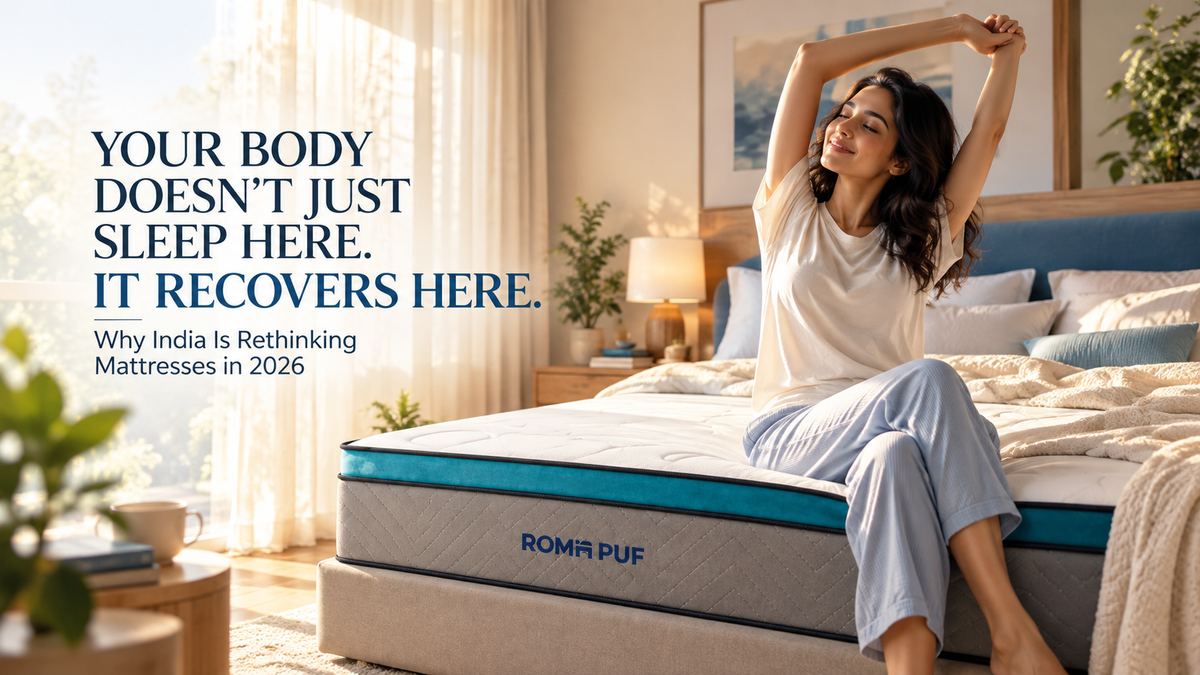

Indian offices went hybrid years ago, but 2026 is the year the hangover finally showed up on X-rays and in bedrooms. Physiotherapists across metro India are reporting a steady rise in patients under 35 complaining of chronic lower back and neck pain, and most of them trace the problem to the same two places: a laptop-height dining chair, and a mattress that was never built for how much time they now spend lying on it, working through pain, or trying to recover from a day that never really switches off.
This is the year Indian consumers stopped treating sleep as a passive default and started treating it as a performance input, something to be optimized the way a runner optimizes shoes. Industry commentary on 2026 buying patterns has started calling this shift a move from "hustle culture" to "recovery culture" — the idea that rest is no longer the reward you get after productivity, but the infrastructure that makes productivity possible at all. Recent reporting has flagged that nearly six in ten urban Indians now deal with some form of lower back discomfort linked to sedentary routines, and that buyers are actively asking for orthopedic support, breathable materials, and hygiene assurances rather than simply picking the softest or cheapest option in the showroom.
At the same time, India's broader sleep economy is having a moment. Sleep aid and wellness spending has been climbing steadily, awareness around sleep apnea and disrupted sleep has grown alongside AIIMS-linked research suggesting a meaningful share of Indian adults live with some form of obstructive sleep apnea, and the conversation has expanded well beyond mattresses into wearables, supplements, and sleep tracking apps. All of this points to the same underlying shift: Indians are finally willing to spend on sleep the way they've long spent on gyms, diets, and skincare.
If you're mattress shopping in 2026, here's what that shift actually means for your bedroom, and what to look for.
The back pain epidemic hiding in the work-from-home boom
The single biggest driver of this year's mattress conversations is spinal health, and it isn't hard to see why. Years of working from beds, sofas, and makeshift desks have quietly reshaped how Indians sit, sleep, and recover. A mattress that sags in the middle or offers no differentiated support along the spine doesn't just cause a bad night's sleep — over months, it compounds into the kind of chronic pain that sends people to physiotherapists in their late twenties.
The fix isn't a rock-hard mattress, which is the old, outdated assumption. It's engineered support: layers that respond to where your body actually needs cushioning versus where it needs firmness, so your spine stays aligned whether you sleep on your back, side, or stomach. This is why "orthopedic" has become one of the most searched mattress terms in India this year, alongside phrases like "back support mattress" and "spine alignment sleep." At Roma Puf, this is the starting point for every design conversation — a mattress should feel like it's actively working with your body overnight, not just cushioning it.
Beating the heat: why temperature regulation is the new must-have
India's climate has always made temperature a sleep issue, but 2026 has pushed it further up the priority list. Longer, more intense summers and increasingly humid monsoon stretches across much of the country mean that a mattress which traps heat isn't just uncomfortable, it actively disrupts the deep sleep cycles your body needs for physical recovery. Sleep researchers have long pointed out that core body temperature needs to drop for you to fall into and stay in restorative sleep, and dense, heat-retaining foams work directly against that.

This is a big part of why cooling technology has moved from a "nice to have" to a genuine purchase driver, especially in tier-1 and tier-2 cities where air conditioning isn't always run all night. Roma Puf mattresses built with Aerowick 2D cooling technology are designed around exactly this problem, using an engineered airflow structure that pulls heat and moisture away from the sleeping surface instead of letting it build up under you. It's the kind of feature that doesn't show up in a showroom test-lay but makes a real difference at 3 a.m. in July.
Hygiene is the new health metric for sleep
The third thread running through 2026's sleep conversation is hygiene, and it's arriving from two directions at once. On one side, rising awareness of allergies, dust mites, and skin sensitivities has made people more curious about what's actually living inside their mattress after a few years of humid Indian weather. On the other, the broader wellness-industry conversation around sleep disorders and disrupted rest has made people more attentive to anything that could be quietly working against their sleep quality — including the mattress fabric itself.
Humidity is the real villain here. Mattresses that absorb moisture over monsoons and muggy nights become a natural breeding ground for bacteria and odour-causing microbes, especially in fabric layers that sit closest to skin. That's the specific problem Mel ion+ antibacterial fabric is built to address in Roma Puf mattresses — a fabric treatment designed to inhibit bacterial growth on the surface you sleep on every night, so the mattress that felt fresh on delivery day still feels that way well into its second or third year of daily use.
The Ayurvedic angle: why wellness brands are going back to natural roots
One of the more interesting undercurrents in Indian wellness this year is a return to ingredients people already trust — turmeric in skincare, ashwagandha in supplements, and tulsi in almost everything from teas to topical products. It's a natural extension of a broader "clean wellness" mood: consumers want the benefits of modern engineering without feeling like they've traded away anything traditional or natural to get them.
Sleep products are catching up to this instinct. Tulsi has been used in Indian households for generations for its calming aroma and natural properties, and that cultural association with calm, clean air makes it a fitting fit for a product you spend a third of your life in direct contact with. Roma Puf's Tulsi Technology brings that same familiar, trusted ingredient into the mattress layer itself, pairing a natural approach to freshness with the more technical performance layers like cooling and antibacterial protection. It's less about a single dramatic feature and more about the mattress feeling like it belongs in an Indian home, in the same way a diffuser or a cup of tulsi tea does.
Building your own "recovery sleep" routine
None of this works in isolation. A cooling, hygienic, well-supported mattress is the foundation, but 2026's recovery-culture mindset is really about treating the whole wind-down process as one connected system. That can mean small things: keeping screens out of the last thirty minutes before bed, keeping the bedroom a few degrees cooler than the rest of the house, and being honest with yourself about whether your current mattress is helping your body recover or quietly working against it.
If you've been waking up with a stiff back, sleeping hot even with the fan on, or noticing your mattress doesn't feel as fresh as it once did, those are exactly the signals this year's sleep trends are telling people to pay attention to. The good news is that fixing it doesn't have to be a leap of faith.
That's also why we back every mattress with a 100-night trial — because the only real test of whether a mattress solves your back pain, your heat problem, or your hygiene concerns is sleeping on it, in your own bed, through a few genuinely hot nights and a few genuinely long weeks. If it's not the right fit, you're not stuck with it. Recovery sleep shouldn't be a gamble, and in 2026, it doesn't have to be.



Leave a comment
This site is protected by hCaptcha and the hCaptcha Privacy Policy and Terms of Service apply.